
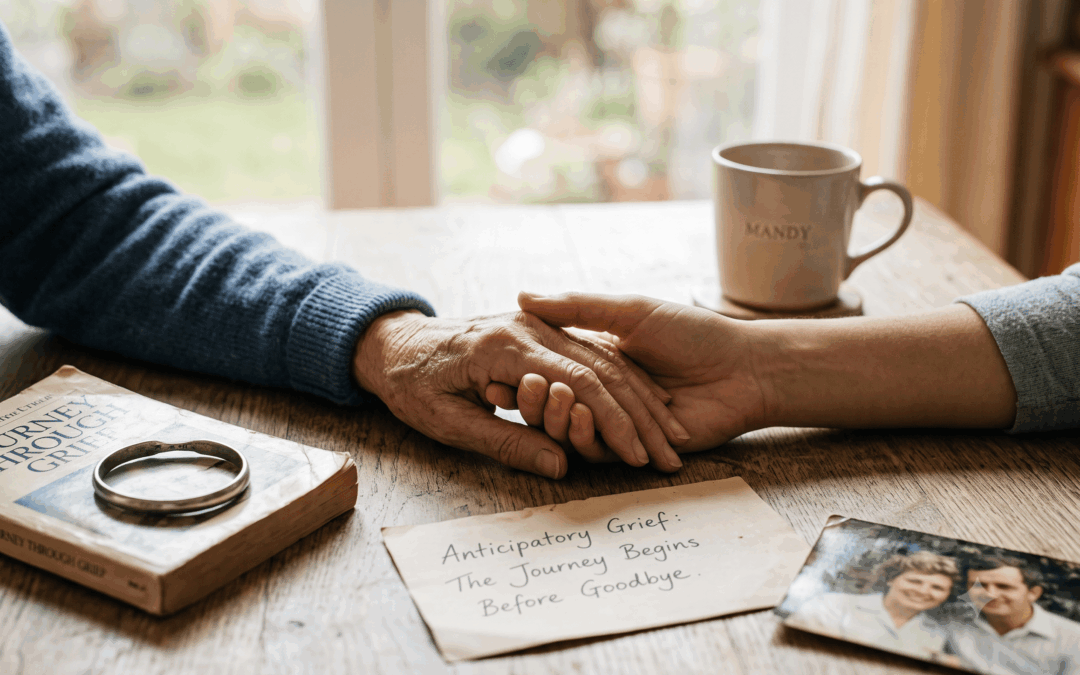
Recently, I helped a relative who has an advanced illness move into assisted living. Watching someone once so strong become frail and dependent was a stark reminder of life’s fragility.
Meanwhile, my father—though still largely independent—is no longer the “I-can-fix-anything” man. I am learning to support him while quietly grieving what is slipping away.
These experiences echo my mother’s illness years ago. When she was diagnosed with cancer, I sought a grief counsellor and first learned the term “anticipatory grief.” That professional support gave me permission to feel sadness, fear, and frustration without shame.
What Anticipatory Grief Really Is
Most people assume grief starts after a death. In truth, it often begins the moment life changes irreversibly:
- When a spouse no longer recognizes you.
- When a parent loses the hobbies they once loved.
- When a sibling’s personality shifts due to illness.
These aren’t single losses. They are hundreds of small losses accumulating over time, with no clear ending point.
This type of grief is incredibly confusing precisely because it doesn’t follow rules. Sadness, gratitude, frustration, guilt, and relief can all surface in the same day. Caregivers often silence themselves with thoughts like, “But they’re still alive,” or “Others have it worse.”
The truth is: Grief doesn’t wait for a funeral.
The Caregiver’s Hidden Burden
Caring for someone with a progressive illness is a profound act of love, but it is also exhausting. A quiet mountain of pressure builds up while caregivers neglect their own needs:
- Constant worry and chronic stress
- Shifting family roles
- Agonising medical decisions
- Financial strain and social isolation
The biggest lesson I learned from caring for both my mother and now my father is this: I cannot care well from an empty cup.
Self-care isn’t selfish; it is what lets me stay patient and present. I let my father do what he still can, I read to understand what is ahead, and I ask for help so I can rest. Those breaks aren’t indulgent—they are essential to being a sustainable caregiver.
Grieving Someone Who is Still Living
When experiencing anticipatory grief, you are not necessarily grieving their death yet. Instead, you are grieving:
- The relationship as it used to be.
- The conversations you will never get to have.
- The future you had imagined together.
These losses are deeply real, even when they remain invisible to the outside world.
Navigating Caregiver Guilt
Guilt is almost universal in this journey. You might feel guilt over losing your patience, desperately wanting a day off, feeling a wave of relief when someone else takes over, or even wishing the suffering would finally end.
None of this makes you a bad person. It makes you human.
Well-meaning comments from others like “At least you still have time” can feel incredibly dismissive. What caregivers usually need isn’t unsolicited advice; it’s simply someone willing to listen without judgment.
Family, Connection, and New Shapes of Love
Illness affects the entire family unit, and everyone copes differently. Some people dive into information-gathering, others focus on practical caregiving, and some may withdraw entirely.
Families fare best when they:
- Communicate openly about their feelings and fears.
- Share responsibilities so the burden doesn’t fall on just one person.
- Remember to support the primary caregiver, too.
No one has to do this alone. Counsellors, support groups, and community resources are available to help carry the weight.
Connection can still exist, even if it looks different now. It can be found in a silence held together, a familiar piece of music, looking through old photographs, or simply sitting side-by-side in the garden. The relationship changes, but love finds new shapes.
Caring for Yourself: A Quick Checklist
Neglecting your own health leads straight to burnout and illness. If you are in the thick of caregiving, ask yourself regularly:
- [ ] Have I eaten a nourishing meal today?
- [ ] Have I rested or slept sufficiently?
- [ ] Have I talked honestly with someone about how I’m coping?
- [ ] What do I need right now in this exact moment?
Accepting help and allowing yourself to rest without guilt isn’t abandoning your loved one—it is exactly what lets you keep showing up for them.
There’s No Right Way to Grieve
Hope and heartbreak can coexist. Grief isn’t a task you finish; it is something you learn to carry while still finding moments of joy and connection. Healing doesn’t mean forgetting; it means loving someone while adapting to a relationship that keeps changing.
Whatever illness your loved one is facing, your exhaustion is valid and your wellbeing matters.
Seeking support isn’t a sign of failure. It is often the greatest gift you can give to yourself—and to the person you love. This grief deserves recognition and compassion.
So do you.
Recent Comments